
Forty-six billion plastic bottles recycled. One billion T-shirts’ worth of textile and yarn waste converted into high-quality fibre. When a recognition programme reaches those cumulative figures — confirmed by UNIFI® alongside its brand partners — it stops functioning as a marketing exercise and starts operating as measurable evidence that recycled material infrastructure is scaling.
UNIFI®, makers of REPREVE®, announced the winners of its ninth annual REPREVE® Champions of Sustainability Awards on April 7, 2026, in Greensboro, North Carolina. The programme recognises brands and mills advancing circularity through their use of REPREVE® recycled fibre — and this year’s edition expanded the framework in a way that I think signals where the next phase of recycled textile development is actually heading.
What REPREVE® Recycled Fibre Delivers at Manufacturing Scale
REPREVE® is a branded recycled fibre produced from post-consumer plastic bottles and, increasingly, post-industrial textile waste. UNIFI® transforms these feedstocks into recycled polyester yarns suitable for performance apparel, activewear, outdoor gear, home textiles, and accessories. The fibre carries traceability built into the production chain, allowing brand partners to verify recycled content claims at the yarn level.
This matters in an industry where recycled content assertions frequently outpace verification. For mill operators sourcing recycled polyester, traceable fibre documentation directly supports compliance with retailer sustainability requirements and emerging regulatory frameworks around textile content transparency.
The scale of the REPREVE® network — spanning global brands and regional mills — means that when UNIFI® introduces a new award category, it reflects where meaningful volume is beginning to move, not simply where brands aspire to go.
Ninth REPREVE® Champions Programme Expands Into Textile Waste
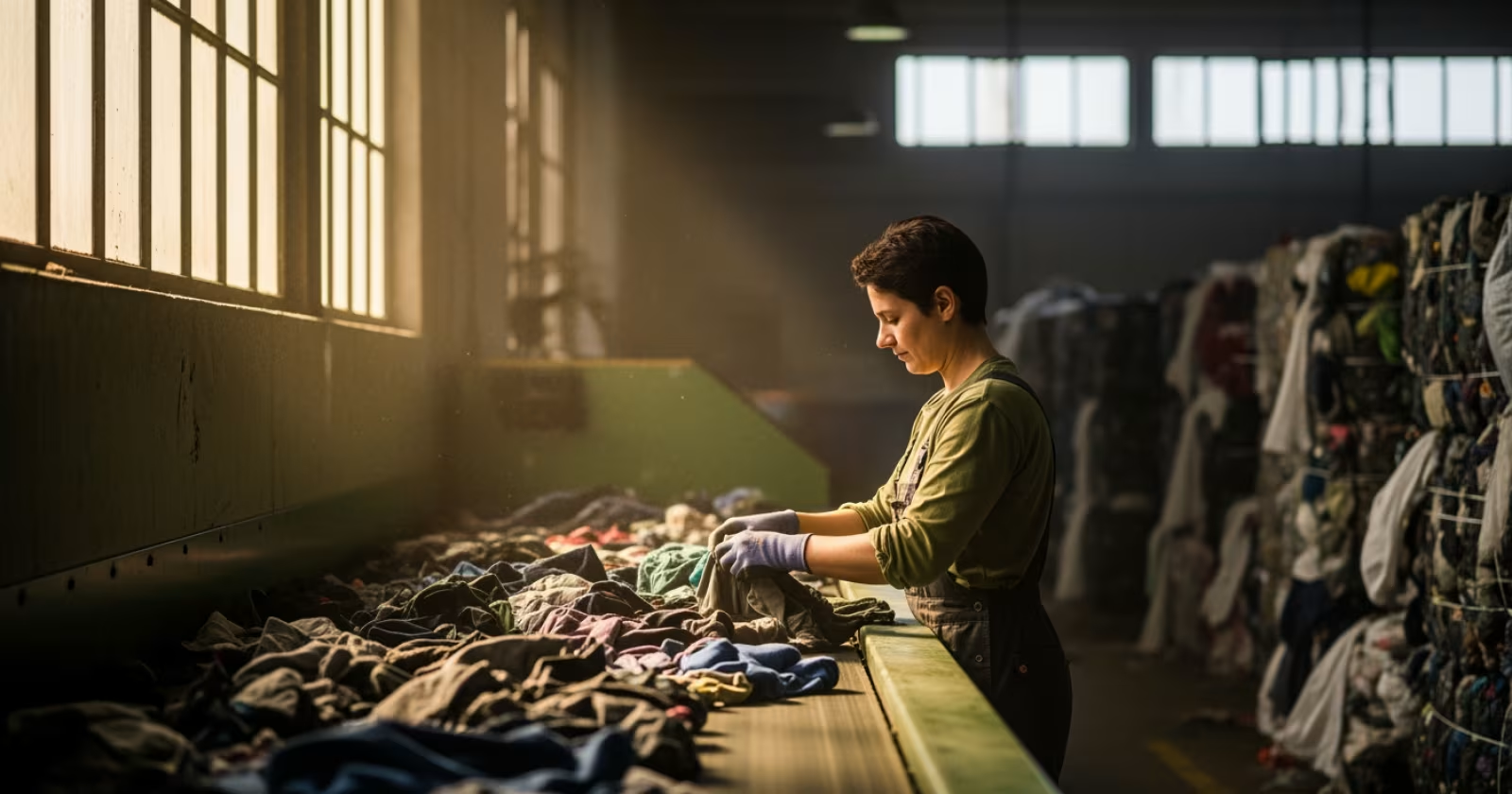
This year’s programme introduced a new Textile Waste Awards category, recognising companies accelerating circular solutions by incorporating textile waste — not just plastic bottle feedstock — into their products. That distinction is technically and commercially significant.
Recycling post-consumer plastic bottles into polyester is a well-established process. Closing the loop on textile-to-textile waste is considerably more complex, requiring sorting infrastructure, fibre separation technology, and feedstock consistency that the industry is still actively building out. Formalising recognition of brands and mills making progress in this space signals that textile-to-textile circularity is moving from pilot to programme.
Eddie Ingle, CEO of UNIFI, stated at the announcement: “These awards celebrate the brands and partners who are not only setting ambitious sustainability goals, but actively delivering measurable impact through innovation and collaboration. Their leadership demonstrates how recycled and circular materials can scale across categories while maintaining performance and quality.”
Award Categories and What Each Signals for the Supply Chain
| Award Category | Focus Area | New in 2026 | Supply Chain Signal |
|---|---|---|---|
| REPREVE® Champions of Sustainability | Recycled content leadership across product categories | No | Established recycled polyester adoption at volume |
| Textile Waste Awards | Integration of textile waste into finished products | Yes | Textile-to-textile circularity gaining commercial traction |
| Sustainability-Focused Brand Categories | Broader brand partner sustainability commitments | No | Multi-category sustainability integration across tiers |
What This Programme Does Not Resolve
The REPREVE® Champions framework is a recognition programme, not a certification scheme. It does not replace GRS (Global Recycled Standard) certification or independent third-party auditing of recycled content claims. Brand partners may hold GRS certification separately, but the two frameworks operate independently of each other.
The cumulative 46 billion bottle figure represents UNIFI’s total tally with brand partners across the programme’s full history — it is not an annual production volume. Specific denier specifications, recycled content percentages, or production figures for individual award-winning products were not disclosed in the announcement.
Textile-to-textile recycling at commercial scale also remains technically constrained. Feedstock consistency, blended fabric separation, and downstream fibre quality continue to limit how quickly this category can grow. Recognising early movers does not close those upstream infrastructure gaps.
Mills and Brands That Gain Most From This Recognition
Mills already running REPREVE® yarns gain market visibility through the awards programme — a practical commercial benefit in a sourcing environment where brand partners increasingly use sustainability credentials to differentiate suppliers. For sustainability directors at apparel brands, the expanded Textile Waste category creates a formal recognition pathway for textile circularity investments that previously had no equivalent benchmark within the REPREVE® ecosystem. I expect participation in this category to increase sharply over the next two award cycles as textile waste feedstock availability improves across North American and European processing networks.
Circularity Recognition as a Market Intelligence Layer
What I find most significant about this year’s announcement is not the award count — it is the structural expansion. Adding textile waste as a distinct category tells the market that UNIFI® sees enough commercial-scale activity in this space to formalise it. That sends a materially different signal than a press release announcing future ambition.
Across the broader textile industry in 2026, circularity is shifting from brand target-setting to supply chain integration. Chemical recycling pilots, mechanical recycling capacity at mill level, and sorting infrastructure investment are all accelerating in parallel. Programmes like the REPREVE® Champions Awards function as a market intelligence layer — showing, year by year, which categories and which supply chain actors are actually moving volume through recycled and circular material pathways rather than simply committing to do so.
If you work in mill sourcing, brand sustainability, or recycled fibre procurement, I’d encourage you to review the full list of brand partner and mill winners at repreve.com/champions-of-sustainability. Understanding which brands are committing to recycled content at scale — and in which product categories — is precisely the kind of supply chain intelligence that should inform your next sourcing decision or capital investment in recycled yarn processing capacity.
Mills that build consistent processing capability for textile-waste-derived recycled fibre now will hold a sourcing position that becomes increasingly difficult for later entrants to close as regulatory pressure on textile content transparency tightens across major import markets through the remainder of the decade.