
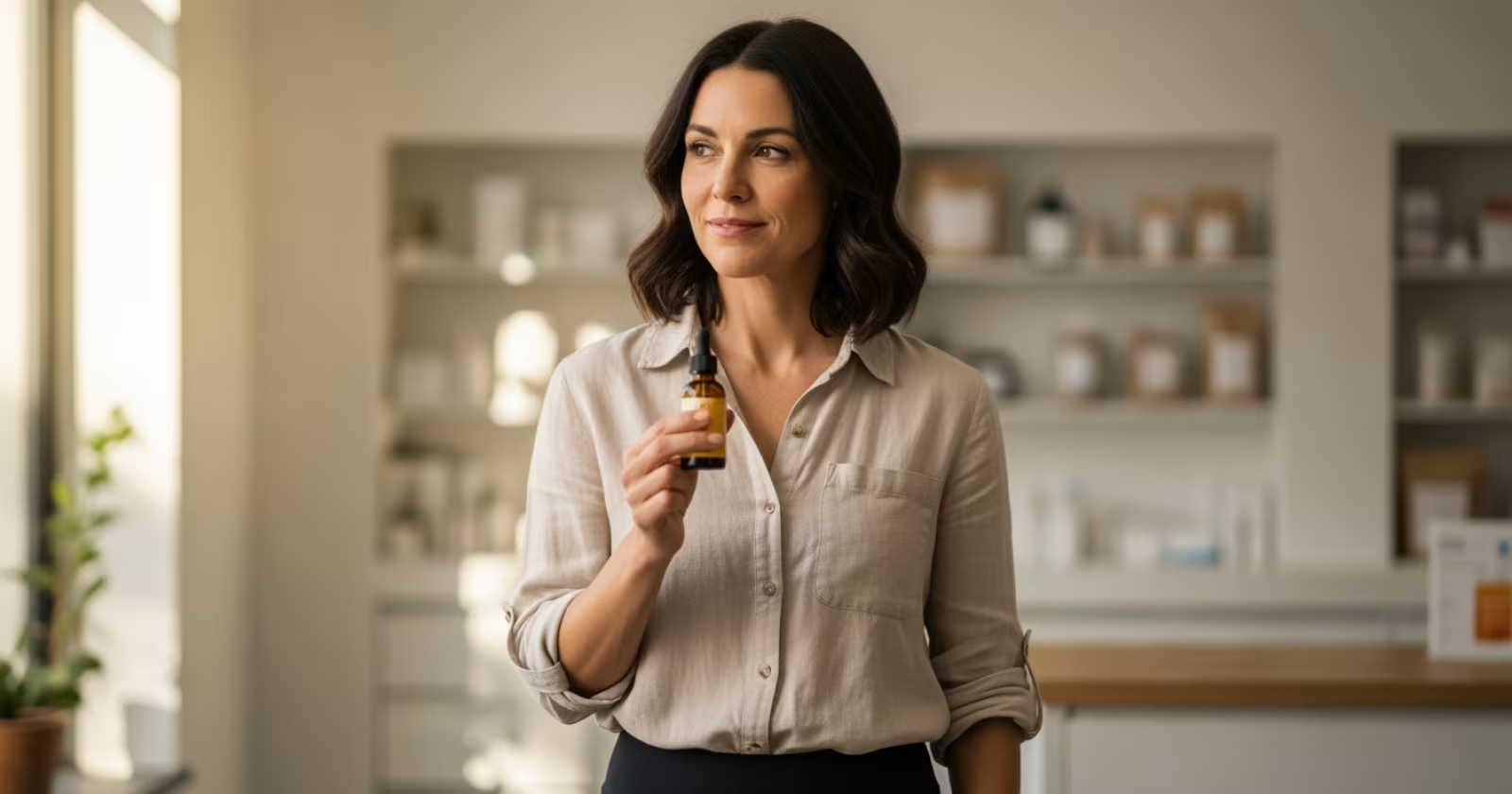
The perimenopause supplement aisle used to be a dusty corner of the pharmacy, avoided by mainstream retailers and largely ignored by serious FMCG investment. When commercially sharp consumer entrepreneurs start backing the category publicly, something structural has shifted.
Pip Edwards, co-founder of activewear label P.E Nation and one of the more commercially literate voices in Australian consumer culture, has thrown her weight behind the emerging perimenopause wellness sector. Her backing is not simply an endorsement play — it reflects a calculated read on where a high-value, underserved demographic is about to redirect significant spending.
For category buyers and brand managers, I’d argue this is one of the clearest signals yet that perimenopause is transitioning from niche health product territory into a mainstream FMCG conversation worth resourcing properly.
What Is the Perimenopause Category and Why FMCG Is Taking Notice
Perimenopause — the hormonal transition that typically begins in a woman’s late 30s to mid-40s, often years before menopause itself — has been conspicuously absent from mainstream retail health strategy. Products addressing its symptoms, including sleep disruption, mood shifts, joint discomfort, and hormonal skin changes, were historically confined to specialist health stores or medical consultations.
That gap is closing fast. Globally, the menopause wellness market is tracking strong growth through the late 2020s, driven by a generation of women who are better informed, more vocal about health needs, and willing to spend on functional products that deliver results. In Australia, the 40–55 female demographic represents one of grocery’s highest-spending cohorts, and the commercial case for perimenopause-focused product development is increasingly hard for major retailers to ignore.
The category is also benefiting from a broader cultural shift. Conversations that were once confined to GP waiting rooms are now happening in mainstream media, social platforms, and consumer brand marketing — normalising the purchase of perimenopause products in a way that accelerates retail adoption.
Pip Edwards and the Perimenopause Investment Thesis
Edwards has been public about her own perimenopause experience, using her platform to destigmatise the conversation and draw attention to the lack of credible product options available to Australian women. Her decision to back businesses in this space carries genuine commercial weight. P.E Nation built its brand identity around the exact demographic that perimenopause brands are now targeting — active, health-conscious women in their 30s and 40s with strong discretionary spend.
The businesses she is supporting operate at the intersection of supplements, functional nutrition, and wellness — a category that accelerated sharply after the pandemic normalised self-managed health routines. For FMCG operators, founder-led advocacy of this kind functions as a category validation signal, the type of visible endorsement that can sharpen a retailer’s confidence in ranging decisions and accelerate shelf space conversations.
It also reflects a pattern seen in adjacent categories. When credible consumer figures with aligned audiences move from user to backer, the market tends to follow within 12 to 24 months.
How the Perimenopause Category Is Taking Shape on Shelf
The perimenopause product set spans several FMCG categories simultaneously. Supplements dominate — magnesium formulations, phytoestrogen blends, and adaptogen-forward products are the most established SKUs. But the category is broadening into functional foods, sleep-support beverages, and targeted skincare addressing hormonal skin changes.
For buyers, this creates both opportunity and complexity. Perimenopause products don’t sit neatly in a single aisle, and brands positioning here need a clear ranging narrative before approaching major grocery chains.
| Product Type | FMCG Category Fit | Key Consumer Need | Primary Retail Channel |
|---|---|---|---|
| Magnesium supplements | Health and wellness | Sleep, muscle recovery | Pharmacy, grocery |
| Phytoestrogen blends | Supplements | Hormonal balance support | Health food, pharmacy |
| Functional herbal teas | Beverages and herbal | Stress and sleep support | Grocery, health food |
| Collagen beverages | Wellness and beauty | Skin and joint support | Grocery, pharmacy |
| Targeted hormonal skincare | Personal care | Hormonal skin changes | Pharmacy, grocery |
What Endorsement Alone Won’t Fix for Category Growth
High-profile backing accelerates awareness, but it doesn’t resolve the structural challenges facing perimenopause brands at retail. Clinical substantiation remains inconsistent across many SKUs — a problem that will matter more as the Australian Competition and Consumer Commission (ACCC) and the Therapeutic Goods Administration (TGA) apply closer scrutiny to wellness health claims.
Ranging decisions at Coles and Woolworths still require a credible velocity story, not just a compelling founder narrative. Without clear aisle ownership and scan data from existing channels, perimenopause brands risk falling between categories rather than anchoring firmly in one.
Brands that move early on pharmacy-first strategies — building credibility and velocity at Chemist Warehouse and independent health channels before pursuing major grocery distribution — are likely to arrive at supermarket ranging conversations in a stronger negotiating position.
Brands with strong clinical backing, a pharmacy-first distribution track record, and category-specific retail strategy stand to benefit most in the near term. The window for being an early mover in major grocery channels remains open — but it won’t stay that way for long as category awareness builds.
Women’s Health Is Becoming FMCG’s Next Structural Growth Lever
The perimenopause conversation sits inside a broader reset in how Australian consumers and retailers are thinking about women’s health across the lifespan. From postpartum nutrition — a category that brands like Pure Mama are actively repositioning at retail — through to midlife hormonal wellness, segments once medicalised or quietly ignored are entering mainstream FMCG territory.
The brands moving early, with genuine product efficacy, credible founder advocacy, and disciplined ranging strategies, are building category positions that will be difficult to dislodge once the demographic fully switches on. That formation phase is happening now, and the commercial advantage belongs to whoever moves with conviction rather than caution.
If you’re building or buying in the women’s wellness space, the time to map your perimenopause strategy is before the major chains formalise their category frameworks — because once the planogram is set, late entrants will pay a much higher price for the same shelf real estate.
Retailers who treat perimenopause as a fringe health category today will be ranging catch-up SKUs under competitive pressure before this decade is out.