
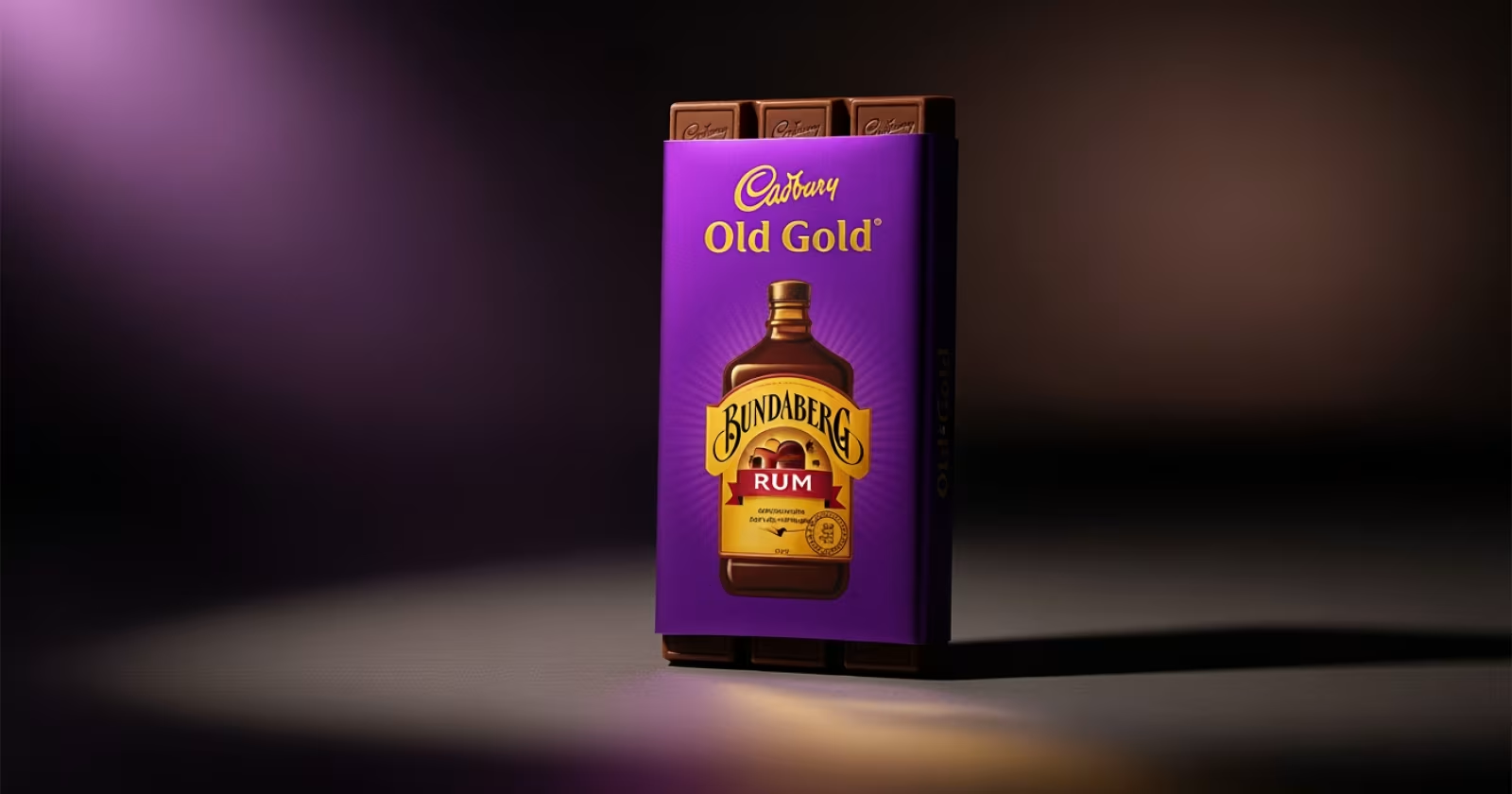
Pairing two heritage Australian brands in a limited-edition dark chocolate block and pushing it into national distribution from day one is not a tentative market test — it is a confident co-branding execution that removes friction for the shopper and delivers immediate shelf presence for both brands.
Cadbury Old Gold and Bundaberg Rum have launched a collaborative limited-edition chocolate block, available now at an RRP of $8 across Coles, Woolworths, and independent supermarkets nationally. The partnership was facilitated by Asembl, an agency specialising in FMCG and lifestyle licensed brand extensions and collaborations.
What Cadbury Old Gold Is and Why the Heritage Angle Matters
Cadbury Old Gold has been on Australian shelves since 1916, which makes it one of the country’s most enduring chocolate lines. It occupies a specific and loyal segment: adult dark chocolate buyers who want depth and familiarity over novelty.
Bundaberg Rum carries its own strong national identity, anchored by decades of brand recognition built around the Bundy Bear mascot. Both sit in the premium-accessible tier — the price range where co-branded limited editions tend to generate the strongest impulse response.
From where I sit, the commercial logic here is straightforward. Licensed brand collaborations in confectionery have a consistent track record of driving incremental purchase among consumers who already buy one brand but have recently disengaged from the other. Asembl operates precisely in this space, and the research-driven framing of their model signals this was a considered market play rather than an opportunistic pairing.
Cadbury Old Gold Bundaberg Rum Block: Confirmed Details and Distribution
The product is a dark chocolate block under the Old Gold range, described as drawing on the bold flavour profile of Old Gold and incorporating the character of Bundaberg Rum. It is available now at an RRP of $8.
Distribution covers Coles, Woolworths, and independent supermarkets across Australia — national reach from launch, not a staged rollout. For a limited-edition product, that level of immediate distribution is commercially significant. It removes the shopper friction of searching for the product in select stores and maximises the window of velocity before novelty fades.
Kartina Watson at Mondelez International confirmed the launch, noting that the collaboration “unites two great Australian-made products and the people and characters behind them, from the makers of Cadbury Old Gold to Bundaberg Rum’s famous Bundy Bear.” Asembl positioned the partnership as a heritage story as much as a flavour one, connecting Cadbury founder MacPherson Robertson’s legacy with Bundaberg Rum’s brand iconography.
How the Co-Branding Structure Works in Practice
The mechanic here follows a pattern Asembl and similar FMCG licensing specialists have refined: anchor a new product in two existing brand loyalties rather than building consumer trust from scratch. Old Gold provides the format — an established dark chocolate block that sits naturally in the confectionery aisle without requiring shopper education. Bundaberg Rum provides the flavour story and the cultural equity.
Neither brand carries the launch alone, and neither takes on excessive brand risk from the association. That shared ownership of risk is a key reason facilitated collaborations like this one tend to move through internal approval processes faster than solo NPD cycles.
| Detail | Confirmed Information |
|---|---|
| Product name | Cadbury Old Gold inspired by Bundaberg Rum |
| Category | Dark chocolate block |
| RRP | $8.00 |
| Distribution | Coles, Woolworths, independent supermarkets |
| Edition type | Limited edition |
| Facilitated by | Asembl — FMCG licensed brand collaborations agency |
| Mondelez spokesperson | Kartina Watson, Mondelez International |
| Old Gold on shelf since | 1916 |
At $8, the block sits at a price point that signals quality without crossing into gifting territory. That positioning keeps it within impulse range while giving the product enough margin headroom to justify national promotional support at both major retailers.
What This Launch Does Not Change
This is a limited-edition product, and that framing matters for anyone reading broader strategic intent into it. It will not reshape the dark chocolate category permanently, nor does it indicate a standing range extension for Old Gold. When the production run sells through, the line ends — unless both parties choose to revisit it.
The collaboration also does not address the structural pressure Mondelez has flagged on cocoa input costs, which weighed on the company’s profit result in its most recent annual period. A premium limited-edition block at $8 supports brand equity but does not materially shift commodity exposure.
Woolworths and Coles confectionery buyers will be watching velocity data closely in the first four to six weeks on shelf. That scan data is what shapes whether future Asembl-facilitated collaborations receive the same level of national distribution commitment from the major retailers.
Australian FMCG Co-Branding and the Case for Heritage Pairing
This collaboration fits a wider pattern taking shape in Australian FMCG: pairing recognisable local heritage brands to generate limited-edition products that cut through in a crowded confectionery aisle without requiring heavy above-the-line spend. Bundaberg has run this playbook before, most recently in a collaboration with Kettle for flavoured crisps, and the model has proven repeatable.
As retailer private label continues to grow in chocolate and snacking, this kind of licensed co-branding becomes one of the more efficient tools branded manufacturers have to defend shopper attention and justify premium shelf positioning. For Asembl, a successful national launch here reinforces the agency’s position as a specialist facilitator in a niche that is becoming structurally more valuable as more FMCG manufacturers look for collaboration pathways rather than solo NPD at full cost.
If you work in confectionery ranging, brand licensing, or new product development, the Cadbury Old Gold and Bundaberg Rum collaboration is worth examining closely — not just as a product launch but as a blueprint for how two mature, category-leading brands can create genuine incremental demand without diluting either equity. Track the velocity data when it becomes available, and consider what heritage brand pairings in your own portfolio or supplier network might be sitting unused.