
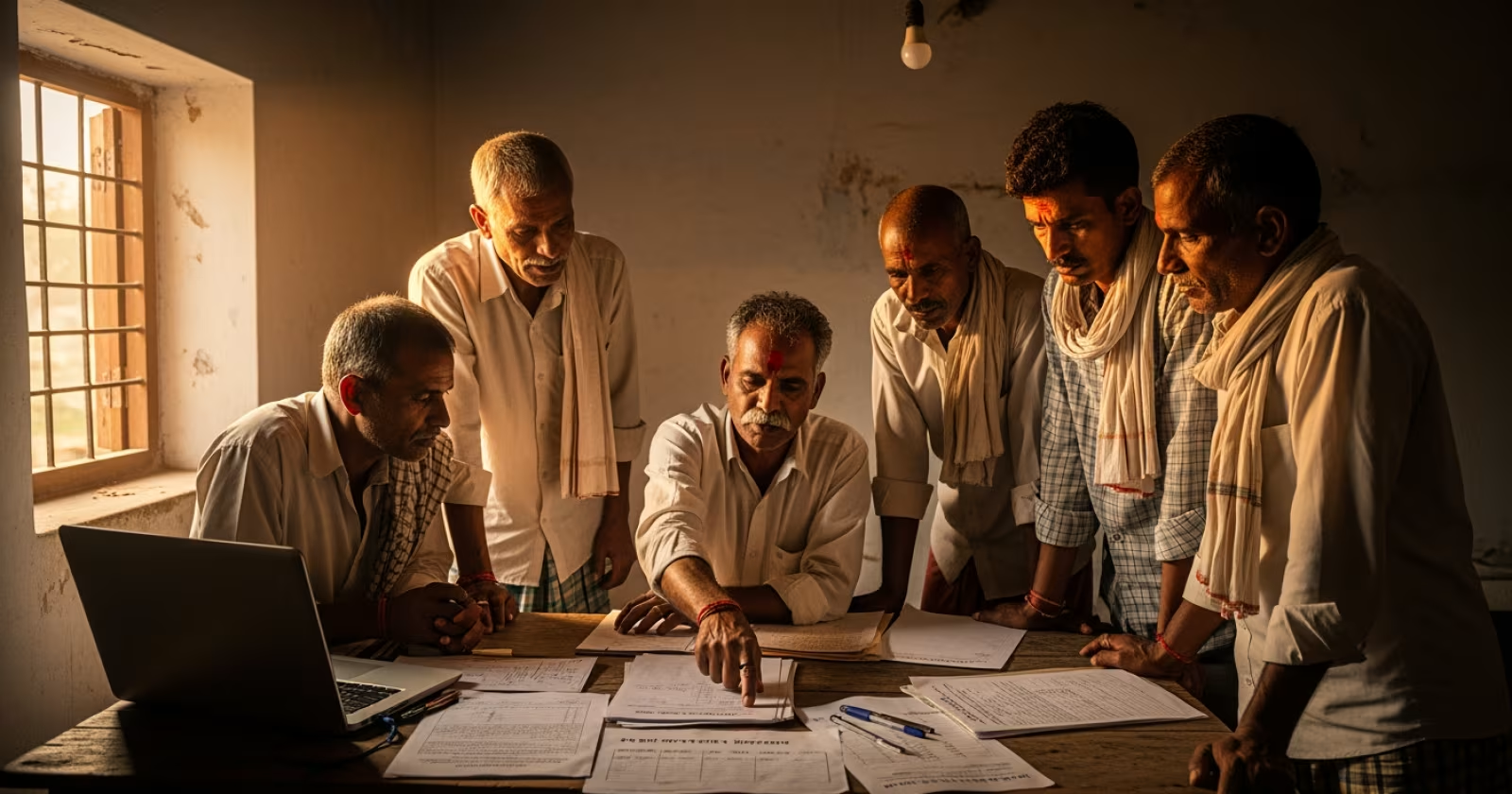
The last time you ordered groceries through a government-backed e-commerce network or checked fertiliser prices on a farming app, there’s a reasonable chance a cooperative was sitting quietly on the other side of that transaction. I’ve been tracking India‘s cooperative sector for years now, and the thing that strikes me most in 2026 isn’t a new dairy plant or a warehouse — it’s a line of code. Digital cooperatives are reshaping how 300 million Indian cooperative members interact with markets, credit, and each other, and the vast majority of beneficiaries have no idea they’re part of one.
The Cooperative You Didn’t Know Was on Your Phone
Consider Ramesh Patel, a smallholder cotton farmer in Surendranagar, Gujarat. In late 2026, he started selling his lint through a platform linked to the Open Network for Digital Commerce (ONDC). The buyer was a cooperative marketing federation. Ramesh never visited a mandi. He received ₹47,200 directly into his bank account, roughly 8% more than what the local trader had offered him the previous season. He told a local reporter he thought he was simply using “a government app.” He was, in fact, transacting through a digitally enabled cooperative supply chain.
This is not an isolated anecdote. Across India, cooperatives are embedding themselves into digital infrastructure so seamlessly that the cooperative identity becomes invisible to the end user. And that invisibility is both their greatest strength and their most underappreciated risk.
Why Digital Cooperatives Matter Now
India has over 8.5 lakh registered cooperatives — the largest network in the world. Yet for decades, most operated on paper ledgers, manual record-keeping, and physical meetings. The Ministry of Cooperation, established in 2021 under Amit Shah, made digitalisation a centrepiece of its reform agenda. By 2026, the flagship PACS Digitalisation Programme has connected approximately 63,000 Primary Agricultural Credit Societies to a common digital platform, enabling them to offer banking, insurance, and input-supply services through a single window.
The ambition is enormous. When a PACS society goes digital, it doesn’t just modernise bookkeeping — it becomes a node in a national cooperative data grid. Fertiliser distribution, crop loan disbursement, warehouse receipt financing — all of it can flow through one connected entity at the village level. NABARD has been the financial backbone of this push, channelling over ₹2,400 crore into cooperative technology upgrades since 2023.
How the Digital Layer Actually Works
I want to break down the mechanics here because the phrase “digital cooperative” can mean wildly different things. At the most basic level, we’re talking about three layers of transformation:
| Layer | What It Does | Example |
|---|---|---|
| Transactional | Digitises payments, sales, and credit | PACS societies issuing crop loans via mobile |
| Platform | Connects cooperatives to e-commerce and logistics networks | ONDC integration for cooperative retail |
| Data & Governance | Enables real-time auditing, member voting, and transparency | CoopConnect dashboards for state federations |
The transactional layer is the most mature. IFFCO Kisan, the digital arm of the fertiliser cooperative giant, already serves over 5 million farmers with price alerts, weather advisories, and market linkages through its app. Amul’s entire milk procurement chain — from the village-level weighing station to the national distribution network — runs on a proprietary digital system that processes payments to approximately 36 lakh milk pourers.
The platform layer is newer and more experimental. Several state cooperative marketing federations have begun listing products on ONDC, effectively turning cooperatives into e-commerce sellers without requiring them to build their own apps. This is the layer where the end consumer interacts with a cooperative product — organic honey from a tribal cooperative in Odisha, handloom from a weavers’ society in Varanasi — without necessarily knowing its origins.
The governance layer is the least developed and, frankly, the most important. Real-time auditing tools and digital member registers could solve one of Indian cooperatives’ oldest problems: opacity. But adoption here remains patchy.
What’s Broken in This Promising Picture
I’d be doing you a disservice if I painted this as a clean success story. The challenges are structural. First, digital literacy among cooperative board members — often elected local leaders in their 50s and 60s — remains low. A 2026 survey by the National Cooperative Union of India found that only 34% of PACS secretaries in Hindi-belt states could independently operate the new digital platform without handholding.
Second, connectivity. Many PACS are in villages where 4G is unreliable. The system works beautifully in a demo in Delhi; it falters when a secretary in Bundelkhand tries to process a loan application during monsoon season with intermittent signal.
Third — and this is the structural risk nobody talks about enough — political capture. When cooperatives go digital, they generate data. Who controls that data? In several states, ruling party affiliates dominate cooperative boards. Digitalisation without governance reform risks creating more efficient systems of patronage, not less. The technology is neutral; the institutions wielding it are not.
A Quiet Revolution in Kerala’s Coffee Hills
For a sharper picture of what works, look at Wayanad, Kerala. The Wayanad Social Service Society (WSSS) cooperative network, serving tribal and small-farmer coffee and pepper growers, implemented a blockchain-based traceability system in partnership with a Kochi-based tech startup. Each lot of coffee can now be traced from the tribal grower’s plot to the export buyer’s warehouse. The result: a 12-15% premium on traced lots, with the surplus flowing back to growers. This isn’t a pilot — it’s been running for two harvest cycles now, and approximately 4,800 families are enrolled.
Compare this with Indonesia, where digital cooperative platforms like TaniHub raised significant venture capital but struggled with farmer retention because the cooperative structure was an afterthought. In India, the cooperative structure exists first — the challenge is grafting technology onto it without breaking the democratic bones.
Where This Goes in Five Years
The Ministry of Cooperation’s roadmap targets all functional PACS digitised by 2027. If even 70% of that target is met, India will have the world’s largest digitally connected grassroots economic network. The integration with Jan Dhan accounts, Aadhaar, and UPI creates a plumbing system where a tribal woman in Jharkhand can receive her cooperative dividend directly into her bank account without a single intermediary skimming a rupee.
The real test, though, is whether digital cooperatives can compete with private agri-tech platforms — the DeHaats and Ninjacarts — which move faster, hire better engineers, and aren’t burdened by election cycles. My sense is that cooperatives won’t win on speed. They’ll win on trust and last-mile presence, if they can keep the technology honest.
Back to Surendranagar
Ramesh Patel doesn’t care whether the app on his phone is backed by a cooperative or a startup. He cares that his cotton fetched ₹47,200 instead of ₹43,000. That’s the unsentimental truth about digital cooperatives — their value will be judged not by ideology but by the rupee figure in a farmer’s account. The cooperative movement in India has survived a century of policy shifts. Whether it thrives in the digital age depends on whether it can deliver that rupee figure consistently, transparently, and at scale.
If you’re connected to a PACS, a dairy society, or any cooperative in your district, I’d encourage you to ask one question at your next meeting: has our society been digitised yet? The answer will tell you more about your economic future than any government press release. Explore more on iictf.in to stay informed about the cooperative movement reshaping India from the ground up.