
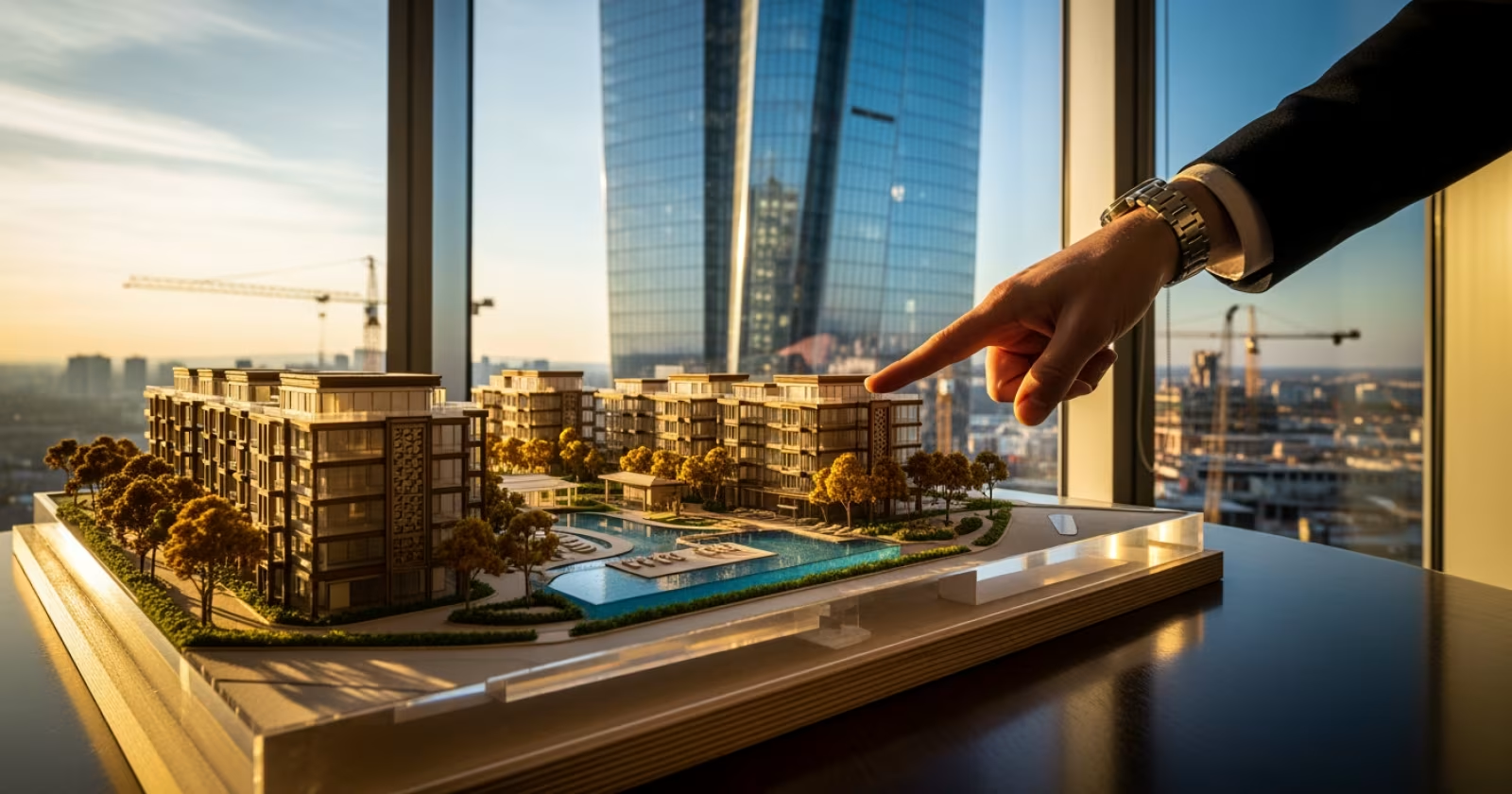
Nearly one million square metres of central Jeddah are about to shift from blueprint to building site, and the name attached to the flagship tower is one that tends to polarise and attract capital in equal measure. Dar Global’s decision to appoint a contractor for its Amaya development marks the moment this project moves from marketing narrative to physical delivery.
The London-listed developer has confirmed a contractor selection for Amaya, its large-scale mixed-use community on King Abdulaziz Road in Jeddah. The development’s centrepiece is Trump Plaza Jeddah, a partnership with The Trump Organization that will combine luxury residences, office space, retail, and lifestyle amenities within a single integrated district.
What Is the Amaya Development and Why It Matters for MENA
Jeddah has long played second city to Riyadh in the Saudi real estate conversation, but that dynamic is shifting. The western port city sits at the intersection of pilgrimage traffic, Red Sea tourism ambitions, and a commercial heritage that predates the oil economy. What it has lacked, until recently, is the kind of master-planned urban district that signals institutional-grade development.
Amaya is designed to fill that gap. Positioned as an upscale residential community often compared to a “Beverly Hills”-style destination, the project brings together residential, commercial, and lifestyle components within a single integrated environment. Landscaped spaces, contemporary infrastructure, and connectivity are central to the design brief.
For Saudi Arabia’s Vision 2030 agenda, projects like Amaya serve a specific function. They demonstrate that private-sector developers, not just sovereign-backed gigaprojects, can deliver urban transformation at scale. That distinction matters to international investors evaluating the kingdom’s real estate pipeline.
Dar Global Advances Amaya With Contractor Appointment
Dar Global has confirmed the appointment of a contractor for the Amaya project, though the company has not publicly disclosed the contractor’s identity or the contract value. What is confirmed is the project’s scope: nearly one million square metres of mixed-use development along one of Jeddah’s primary arterial roads.
The development is structured as a fully integrated live-work-play destination. Residential units sit alongside commercial offices, retail offerings, and premium lifestyle amenities. The Trump Plaza Jeddah component, developed in partnership with The Trump Organization, serves as the flagship element of the wider Amaya masterplan.
I find the location choice particularly telling. King Abdulaziz Road is not a peripheral site waiting for infrastructure to catch up. It is central Jeddah, already connected, already commercially active. That reduces execution risk compared to greenfield megaprojects and shortens the timeline to occupancy and revenue generation.
Dar Global, listed on the London Stock Exchange, has been building a portfolio of branded and luxury developments across the MENA region. The Amaya project represents one of its largest commitments in Saudi Arabia by land area.
How the Amaya District Is Structured
The Amaya masterplan follows a pattern increasingly common in Gulf real estate: the integrated urban district model. Rather than delivering a single tower or gated compound, the developer is creating a self-contained neighbourhood with multiple asset classes designed to function together.
| Component | Description | Status |
|---|---|---|
| Trump Plaza Jeddah | Flagship mixed-use hub with luxury residences, offices, retail | Contractor appointed |
| Residential Community | Upscale housing across the wider Amaya district | In development |
| Commercial Space | Office and business facilities integrated into the masterplan | Planned |
| Lifestyle and Retail | Premium amenities, landscaped areas, connectivity infrastructure | Planned |
| Total Area | Nearly one million square metres | Contractor selected |
The live-work-play model is not new to the Gulf, but its application in Jeddah at this scale is relatively uncommon. Dubai and Riyadh have dominated the integrated district conversation. Amaya’s bet is that Jeddah’s commercial base and geographic position can support a similar product.
I think the Trump Organization branding adds a layer of commercial complexity. In Gulf markets, the Trump name carries recognition value that translates into premium pricing on residential units, particularly among buyers from certain international markets. Whether that premium holds through delivery and into secondary market resale is a different question.
What This Does Not Change
A contractor appointment is a milestone, not a finish line. Dar Global has not disclosed construction timelines, unit pricing, or pre-sale figures for Amaya. The contractor’s identity remains undisclosed, which limits the market’s ability to assess execution capability and project scheduling.
Jeddah’s luxury real estate market also remains less tested than Dubai’s or Riyadh’s at this price point. Absorption rates for upscale mixed-use product in the city are not yet proven at the scale Amaya proposes. The broader Saudi real estate pipeline is enormous, and competition for high-net-worth buyers across the kingdom is intensifying with every new gigaproject announcement.
Regulatory frameworks around off-plan sales in Saudi Arabia continue to evolve, and international buyers navigating the kingdom’s property ownership rules face a different landscape than in the UAE’s more established freehold zones.
For investors watching Dar Global’s London-listed equity, the Amaya contractor appointment signals project progression, but the financial impact depends on contract economics that have not been made public. Jeddah residents and Saudi-based buyers stand to benefit most directly, particularly those seeking branded residential product in a central urban location. The timeline for delivery remains to be confirmed, so near-term impact is limited to sentiment and pre-sales activity.
Saudi Arabia’s Urban Development Push Reaches Jeddah’s Core
The Amaya project fits within a broader pattern I have been tracking across the MENA region: the migration of branded, large-scale real estate development from Dubai into Saudi Arabia’s major cities. Vision 2030 created the policy framework, but it is private-sector capital and international brand partnerships that are now filling in the physical infrastructure.
Jeddah’s positioning is distinct from Riyadh’s. It is a coastal city with established tourism flows, a Red Sea gateway, and a commercial identity that does not depend entirely on government relocation mandates. If Amaya delivers on its masterplan, it could establish a template for private-sector urban districts in Saudi cities beyond the capital.
The contractor appointment moves Amaya from aspiration to execution, and for Dar Global, the next disclosure that matters is when construction begins and what the pre-sale numbers look like. That is where the real market signal will come from.