A USD 43.6 billion capital commitment over five years is not a pledge — it is a procurement schedule. Abu Dhabi‘s clean energy allocation signals that the emirate’s transition from hydrocarbon dependency has moved well past the planning phase and into infrastructure-scale deployment.
The emirate now draws more than 45% of its total energy mix from clean and renewable sources, a threshold that positions it ahead of most major energy-producing economies. The five-year investment plan aims to push that figure to 60%, directly supporting the UAE’s Net Zero 2050 strategy.
What Abu Dhabi’s Clean Energy Push Means for MENA Investors
I find the scale of this commitment worth pausing on. For context, USD 43.6 billion spread over five years translates to roughly USD 8.7 billion annually directed at energy transition infrastructure. That is capital flowing into solar, nuclear, hydrogen, grid modernisation, and storage — sectors that generate long procurement chains and contract opportunities across the Gulf.
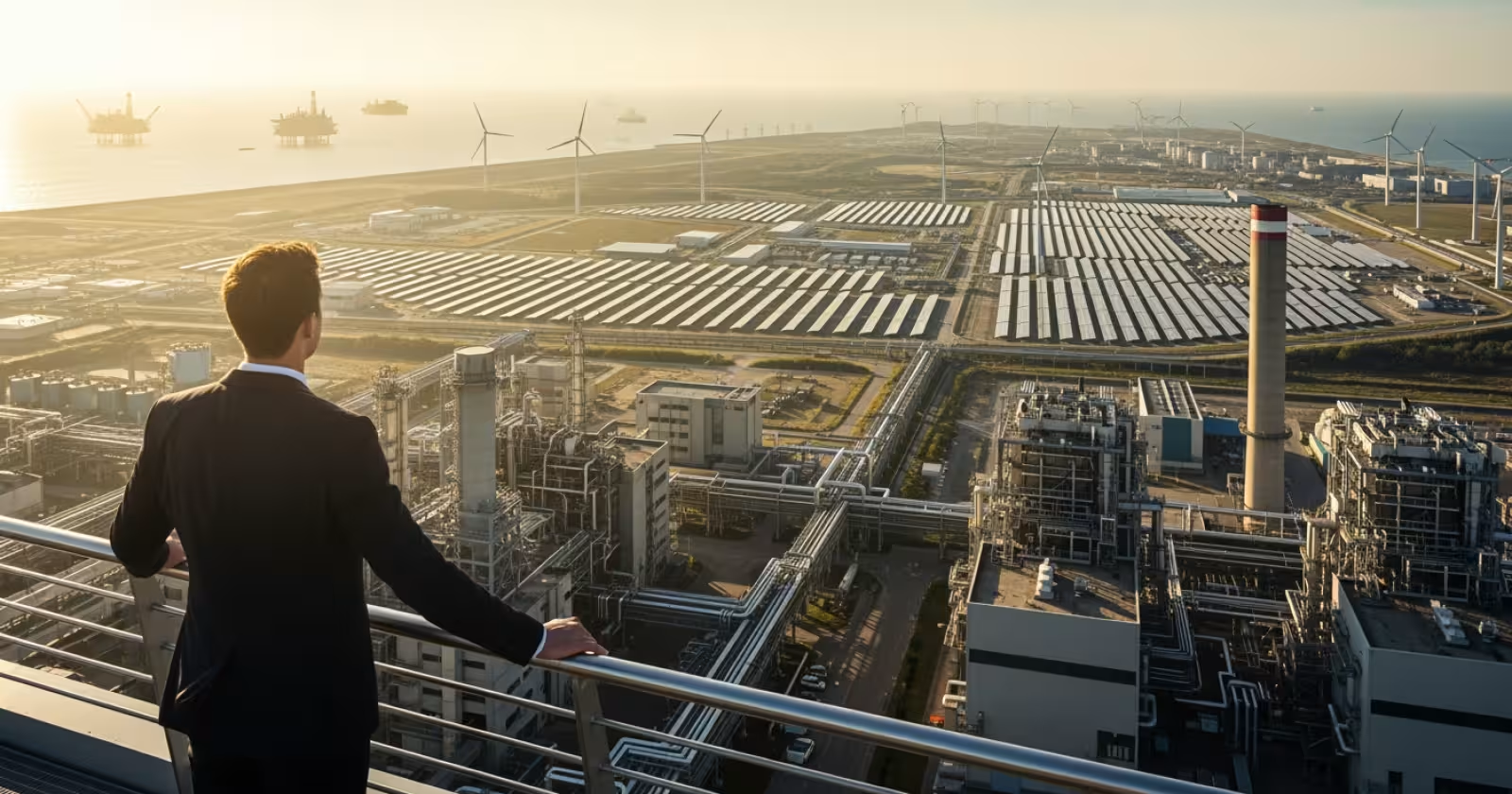
Abu Dhabi’s energy transition did not start here. The emirate has been building clean energy capacity for over a decade, anchored by projects like the Barakah nuclear power plant and the Al Dhafra solar facility, one of the world’s largest single-site solar plants. What has changed is the pace and the policy certainty behind it.
The 45% clean energy contribution already achieved is significant because it demonstrates that large-scale deployment works in a region historically defined by fossil fuel abundance. For MENA economies watching Abu Dhabi’s trajectory, this is less about environmental ambition and more about economic diversification in practice.
Abu Dhabi’s USD 43.6 Billion Clean Energy Investment Breakdown
Authorities have confirmed that the investment will target energy security, system resilience, and economic growth through a diversified, low-carbon portfolio. While specific project-level allocations have not been disclosed publicly, the strategic priorities are clear: expand renewable capacity, adopt advanced energy technologies, and build the infrastructure needed to sustain a 60% clean energy target.
The transition roadmap prioritises capital deployment towards measurable sustainability outcomes. That language matters — it suggests performance-linked investment rather than open-ended spending, which is consistent with Abu Dhabi’s broader fiscal discipline.
| Metric | Current Status | Target |
|---|---|---|
| Clean Energy Share of Total Mix | Over 45% | 60% |
| Investment Commitment | USD 43.6 Billion | Over Five Years |
| Annual Implied Spend | Approx. USD 8.7 Billion | Per Year |
| National Alignment | UAE Net Zero 2050 | Carbon Neutrality by 2050 |
| Focus Areas | Renewables, Grid, Storage | Advanced Energy Tech |
I should note that the absence of a detailed project pipeline in the announcement means we do not yet know how much of this capital is earmarked for solar versus nuclear versus hydrogen or grid infrastructure. That granularity will matter for investors sizing specific sector opportunities.
How the Energy Transition Mechanism Works in Abu Dhabi
Abu Dhabi’s approach to energy transition operates on a dual track. On one side, the emirate scales proven technologies — utility-scale solar photovoltaics and nuclear baseload power — that deliver immediate megawatt capacity. On the other, it invests in emerging technologies like green hydrogen production and advanced battery storage that will define the next generation of the energy mix.
Think of it as building the highway while simultaneously designing the vehicles that will drive on it. The infrastructure spend covers transmission upgrades, smart grid integration, and storage systems that allow intermittent renewable sources to function reliably at scale. Without that grid backbone, a 60% clean energy target would remain aspirational.
Long-term policy frameworks underpin the capital deployment. This is not discretionary spending that shifts with oil prices — it is embedded in Abu Dhabi’s strategic planning architecture, which gives developers and investors a degree of visibility that many emerging energy markets cannot offer.
What This Does Not Change
Abu Dhabi remains one of the world’s largest hydrocarbon producers, and nothing in this announcement alters that reality. ADNOC continues to expand oil and gas capacity in parallel with the clean energy push. The emirate’s energy transition is additive, not substitutive — clean energy grows alongside, not instead of, fossil fuel output.
The 60% clean energy target also does not mean 60% renewable. Nuclear power from Barakah contributes a substantial share of the clean energy mix, and that distinction matters for investors focused specifically on renewables. Additionally, specific timelines for reaching the 60% threshold have not been confirmed, which leaves some ambiguity around the pace of execution.
Regional grid interconnection constraints and technology costs for hydrogen at scale remain open questions that this investment alone does not resolve.
The most immediate beneficiaries are energy infrastructure developers, EPC contractors, and technology providers with existing relationships in the UAE. For institutional investors, the five-year commitment window creates a visible pipeline of project finance and green bond opportunities. Consumers and businesses in Abu Dhabi stand to gain from improved energy security and, over time, more competitive energy pricing as the renewable share grows.
Abu Dhabi’s Clean Energy Spend Reshapes Gulf Capital Flows
I see this allocation as part of a broader pattern across the Gulf where sovereign capital is being redirected at scale towards energy transition infrastructure. Saudi Arabia, Oman, and Qatar are all pursuing similar strategies, but Abu Dhabi’s 45% clean energy share gives it a measurable head start. The USD 43.6 billion commitment reinforces the emirate’s position as the region’s most advanced clean energy market and creates a competitive benchmark that neighbouring economies will need to match to attract the same calibre of international technology partners and project developers.
If you are tracking capital allocation trends in MENA energy markets, this is the kind of commitment that reshapes sector weightings. I would keep a close watch on procurement announcements and project-level disclosures over the coming quarters — that is where the investable detail will emerge.