After 15 years steering the world’s most valuable company, the man who turned Apple into a $4 trillion machine is handing the keys to an engineer. For Gulf sovereign funds and MENA investors with heavy exposure to US mega-cap tech, this is not a routine boardroom shuffle — it is a signal about where Apple’s next trillion comes from.
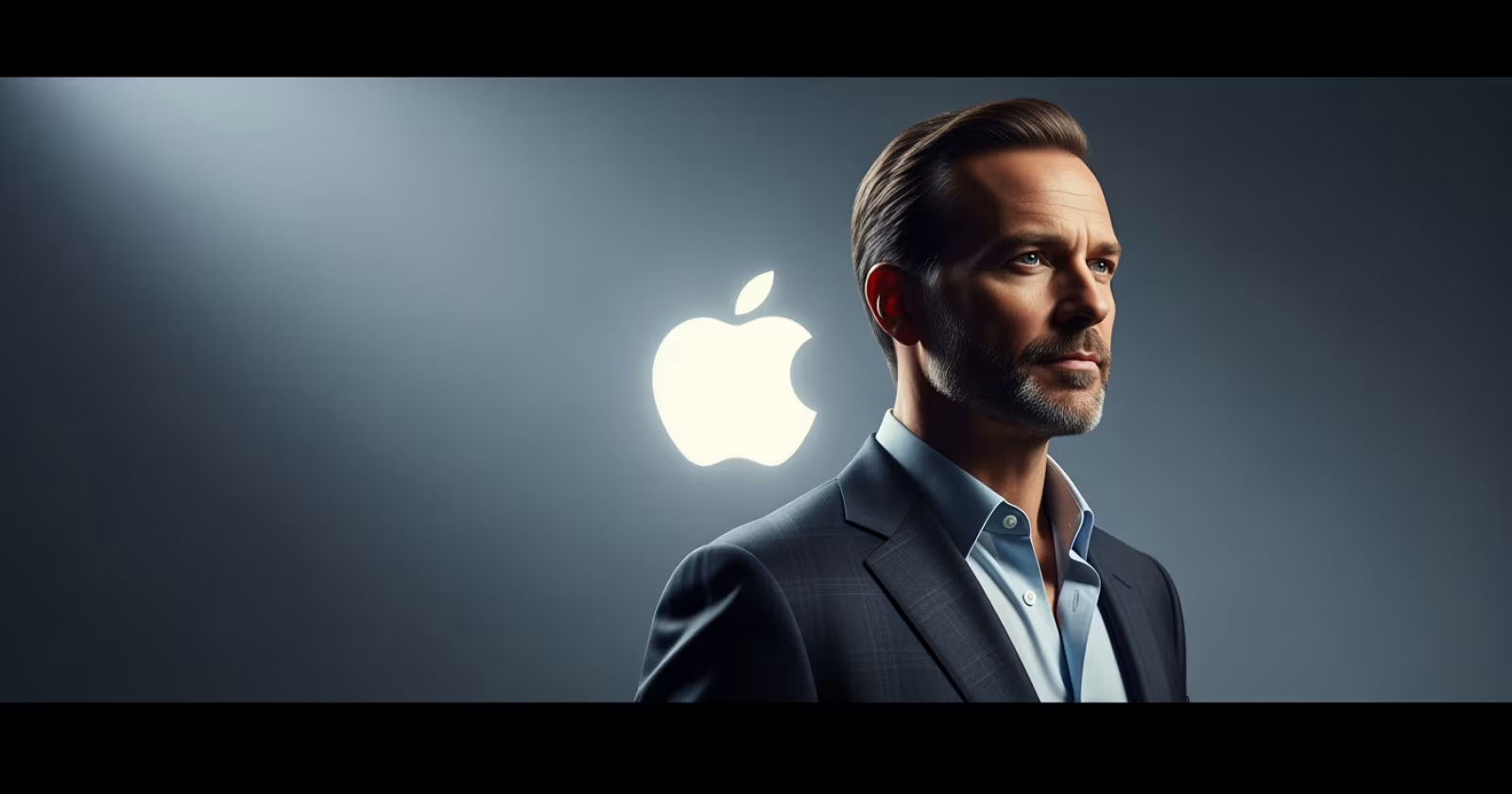
Apple has confirmed that John Ternus, currently head of hardware engineering, will replace Tim Cook as chief executive on 1 September. Cook will transition to executive chairman and remain involved in policymaker engagement globally. The move ends months of succession speculation and places a product-focused leader at the top of the world’s largest listed company.
Why Apple’s CEO Change Matters for MENA Investors
Apple is not just a consumer brand in the Gulf — it is a portfolio staple. Abu Dhabi‘s Mubadala, Saudi Arabia’s Public Investment Fund, and the Qatar Investment Authority all hold significant positions in US equities where Apple consistently ranks among the top holdings. Any strategic pivot at Apple ripples directly through MENA sovereign wealth allocations.
Cook’s tenure delivered extraordinary financial returns. Apple crossed the $1 trillion valuation mark in 2018 and sits near $4 trillion today. That trajectory rewarded patient institutional holders across the region. The question investors now face is whether a hardware-led CEO can unlock the next phase of growth or whether Apple’s best returns are already priced in.
The UAE alone represents one of Apple’s strongest per-capita markets in the Middle East, with premium device adoption rates that outpace most European countries. A CEO who built the products Gulf consumers actually use carries a different kind of credibility than a supply chain specialist.
John Ternus Takes the Helm After 25 Years at Apple
Ternus has spent a quarter-century inside Apple, contributing to every generation of the iPad, multiple iPhone iterations, and the launches of AirPods and Apple Watch. He also led the company’s strategic shift from Intel processors to Apple’s own silicon chips for Mac computers — a move widely regarded as one of Apple’s most consequential engineering decisions in the past decade.
He emerged as the leading internal successor after chief operating officer Jeff Williams departed the company last year. Cook described Ternus as a “visionary” executive with “the mind of an engineer, the soul of an innovator and the heart to lead with integrity and honour.” In his own statement, Ternus called Cook his “mentor” and said he is “filled with optimism about what we can achieve in the years to come.”
Cook will remain chief executive through the summer to support the handover and will continue assisting the company after the transition, including work related to global policymaker engagement.
| Detail | Tim Cook (Outgoing CEO) | John Ternus (Incoming CEO) |
|---|---|---|
| Role from 1 September | Executive Chairman | Chief Executive Officer |
| Years at Apple | 27+ | 25 |
| Background | Operations and supply chain | Hardware engineering and product |
| Key legacy | $1T to ~$4T valuation growth | Apple Silicon, iPad, AirPods, Apple Watch |
| Tenure as CEO | 2011–2026 (15 years) | Starting September 2026 |
What the Leadership Shift Does Not Resolve
A new CEO does not automatically fix Apple’s most persistent criticism: that the company has not launched a breakthrough product on the scale of the iPhone since Cook took over. Dipanjan Chatterjee, a principal analyst at Forrester, credited Cook for financial stability but noted Apple “remains structurally dependent on the phone” as it “searches for its next growth engine.”
Chatterjee added that Ternus must avoid incremental product development and reduce Apple’s reliance on iPhone-driven revenue. The leadership change suggests Apple is pursuing product differentiation, but delivering on that promise is a multi-year proposition. Investors expecting an immediate catalyst may need to recalibrate.
Apple has also faced scrutiny for moving slower than peers in artificial intelligence. The company has integrated Google and OpenAI technology into its operating systems rather than leading with a fully in-house AI offering. Whether Ternus accelerates that approach or doubles down on hardware-AI integration remains an open question.
Innovation Pressure and the Post-Cook Product Roadmap
Gil Luria, managing director at DA Davidson & Co, said a hardware-led chief executive could signal stronger focus on new product categories. He pointed to potential growth areas such as foldable phones and wearable devices, including smart glasses. These are categories where Apple has filed patents but has yet to ship consumer products at scale.
Ken Segall, Steve Jobs’ former creative director, offered a blunter assessment of the transition. “I don’t think Tim ever really shook the operations guy vibe,” he said. The implication is clear: Ternus carries a product identity that Cook never fully established, and that distinction matters for a company whose brand is built on design leadership.
Timothy Hubbard, a professor at the University of Notre Dame Mendoza College of Business, said Cook’s leadership helped Apple refine and scale its existing model. But he noted that Apple’s discipline and control could become constraints if future growth depends on openness and rapid iteration. A new CEO could indicate greater emphasis on integrating AI directly into Apple hardware rather than licensing it from third parties.
Gulf Tech Portfolios Face a Strategic Recalibration
For MENA-based institutional investors, this transition arrives at a moment when Gulf sovereign funds are actively rebalancing between US tech exposure and domestic diversification plays. Apple’s direction under Ternus will influence whether the stock remains a core conviction holding or shifts toward a yield-and-buyback story. The answer depends on whether the new CEO can deliver a product cycle that justifies the current valuation multiple.
The broader trend is worth watching. Saudi Arabia’s Vision 2030 and the UAE’s digital economy strategy both depend on partnerships with companies like Apple for infrastructure, payments, and device ecosystems. A CEO who understands hardware at a molecular level may prove more aligned with the region’s ambitions than a logistics specialist ever could.
I would keep a close eye on Apple’s first product keynote under Ternus — likely in late 2026. That event will tell us more about the company’s next decade than any earnings call. If you hold Apple in your portfolio or track US mega-cap tech from the Gulf, this is the leadership transition that sets the tone for what comes next.