An undersea oil pipeline connecting two South Asian neighbours would redraw energy logistics across the Indian Ocean — and the conversation to build one just moved from concept to diplomatic agenda. For anyone tracking Gulf crude flows into Asia, this is a development worth watching closely.
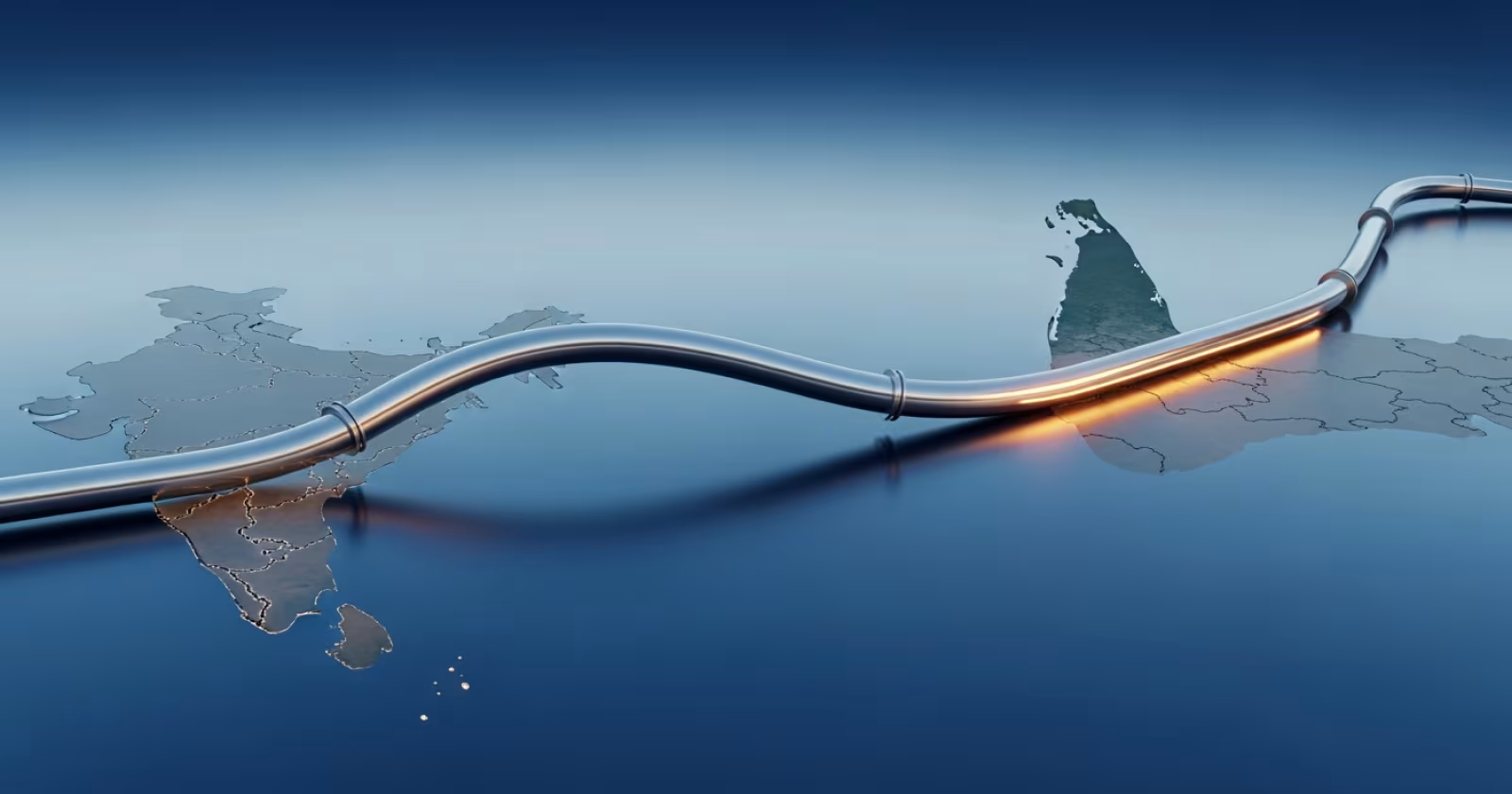
Indian Vice President C P Radhakrishnan and Sri Lankan President Anura Kumara Dissanayake recently held formal talks on a proposal to connect India and Sri Lanka through a cross-border oil pipeline. Foreign Secretary Vikram Misri confirmed the discussions, describing the pipeline and the Trincomalee energy hub project as key developments under active consideration between the two governments.
Why an India Sri Lanka Oil Pipeline Matters for MENA Energy Exporters
I find the timing of this proposal particularly telling. South Asia’s energy demand is accelerating, and India alone accounts for roughly a third of global oil demand growth. Sri Lanka, meanwhile, has struggled with energy security since its 2022 economic crisis, which exposed how vulnerable small island economies are to volatile crude prices and supply chain disruptions.
For MENA-based energy producers and traders, the implications are direct. The Gulf supplies a significant share of both India’s and Sri Lanka’s crude imports. Any infrastructure that streamlines how oil moves within South Asia could reshape procurement patterns, storage economics, and refining margins across the region.
A physical pipeline link between the two countries would reduce Sri Lanka’s dependence on seaborne tanker deliveries for refined products. It would also give India a new channel to monetise its growing refining capacity, potentially turning the southern tip of the subcontinent into a distribution node for the wider Indian Ocean region.
What Was Actually Discussed Between the Two Leaders
According to Vikram Misri, both sides examined a number of ongoing Indian-led initiatives and proposals that had already been discussed at government-to-government level. The oil pipeline proposal and the Trincomalee energy hub project were singled out as the most significant energy-related items on the agenda.
The Trincomalee energy hub refers to a long-discussed plan to develop oil storage and distribution infrastructure at Trincomalee harbour on Sri Lanka’s northeastern coast. The site holds strategic value — it houses legacy oil tank farms dating back to the Second World War, and its deep natural harbour makes it one of the finest port locations in the Indian Ocean.
Beyond energy, the leaders reviewed cooperation on housing initiatives and fisheries-related issues that have historically been sensitive between the two countries. Misri framed the discussions as part of a broader effort to deepen bilateral relations across multiple sectors simultaneously.
No confirmed figures on pipeline capacity, estimated cost, or construction timeline have been disclosed publicly. The discussions remain at the proposal and review stage, which means concrete engineering or financial commitments have not yet been announced.
How a Cross-Border Pipeline Would Function in Practice
I think it helps to understand what a pipeline of this nature would actually involve. The shortest sea crossing between India and Sri Lanka spans roughly 30 kilometres across the Palk Strait, a shallow stretch of water separating Tamil Nadu from Sri Lanka’s northern coast. Subsea pipelines of this distance are technically routine — far shorter than existing offshore pipelines in the Gulf and the North Sea.
The pipeline would most likely carry refined petroleum products rather than crude oil, connecting an Indian refinery hub to a Sri Lankan distribution terminal. This would allow Sri Lanka to import fuel more cheaply and reliably than current tanker-based logistics permit.
| Parameter | Current Status | Potential Pipeline Impact |
|---|---|---|
| Sri Lanka fuel import method | Seaborne tanker deliveries | Direct pipeline supply from India |
| Trincomalee energy hub | Under bilateral discussion | Could serve as pipeline terminus and storage node |
| Palk Strait crossing distance | Approximately 30 km | Technically feasible for subsea pipeline |
| India refining capacity trend | Expanding surplus capacity | New export channel to Sri Lanka and Indian Ocean markets |
| Sri Lanka energy security | Vulnerable to supply disruptions | Reduced dependence on spot tanker market |
The Trincomalee site could function as both a pipeline terminus and a regional storage facility, giving the project a dual commercial rationale. For India, it extends refining export reach. For Sri Lanka, it builds energy resilience that the country badly needs after its recent crisis.
What This Proposal Does Not Yet Change
I want to be clear about the limitations here. No engineering contracts, financing arrangements, or regulatory approvals have been announced. The proposal remains in the diplomatic discussion phase, and infrastructure projects of this scale in South Asia have a long history of delays between announcement and execution.
Sri Lanka’s fiscal position, while stabilising, still constrains its ability to co-finance major infrastructure. India would likely need to structure the project as a concessional or government-backed investment. Environmental clearances for a subsea pipeline crossing the Palk Strait — an ecologically sensitive area — could also introduce delays that neither side has publicly addressed.
Who Stands to Gain From Deeper India-Sri Lanka Energy Ties
Sri Lankan consumers and businesses would benefit most immediately from lower and more stable fuel costs. Indian refining companies with surplus capacity gain a captive export market. Gulf crude exporters may see indirect benefits if the pipeline stimulates higher throughput at Indian refineries that process Middle Eastern grades. The timeline, however, remains uncertain — I would not expect physical construction to begin before extensive feasibility studies and bilateral agreements are finalised.
South Asia’s Energy Infrastructure Push and What It Signals for the Gulf
This pipeline proposal fits into a broader pattern I have been watching across South and Southeast Asia: countries are investing in physical energy connectivity to reduce vulnerability to global shipping disruptions and price volatility. For MENA energy exporters and sovereign investors, these infrastructure buildouts represent both a market opportunity and a strategic consideration. The Gulf’s role as Asia’s primary crude supplier is secure for now, but the downstream infrastructure that determines how that crude is processed and distributed is shifting steadily toward Asian control.
If you are tracking energy investment flows between the Gulf and South Asia, this is a proposal worth following as it moves from diplomatic talking point toward project reality. The pipeline itself may take years, but the strategic intent behind it is already shaping how both countries plan their energy futures.